SPARRSO × DIU Skyward: INQUILAB‑2 Collaboration
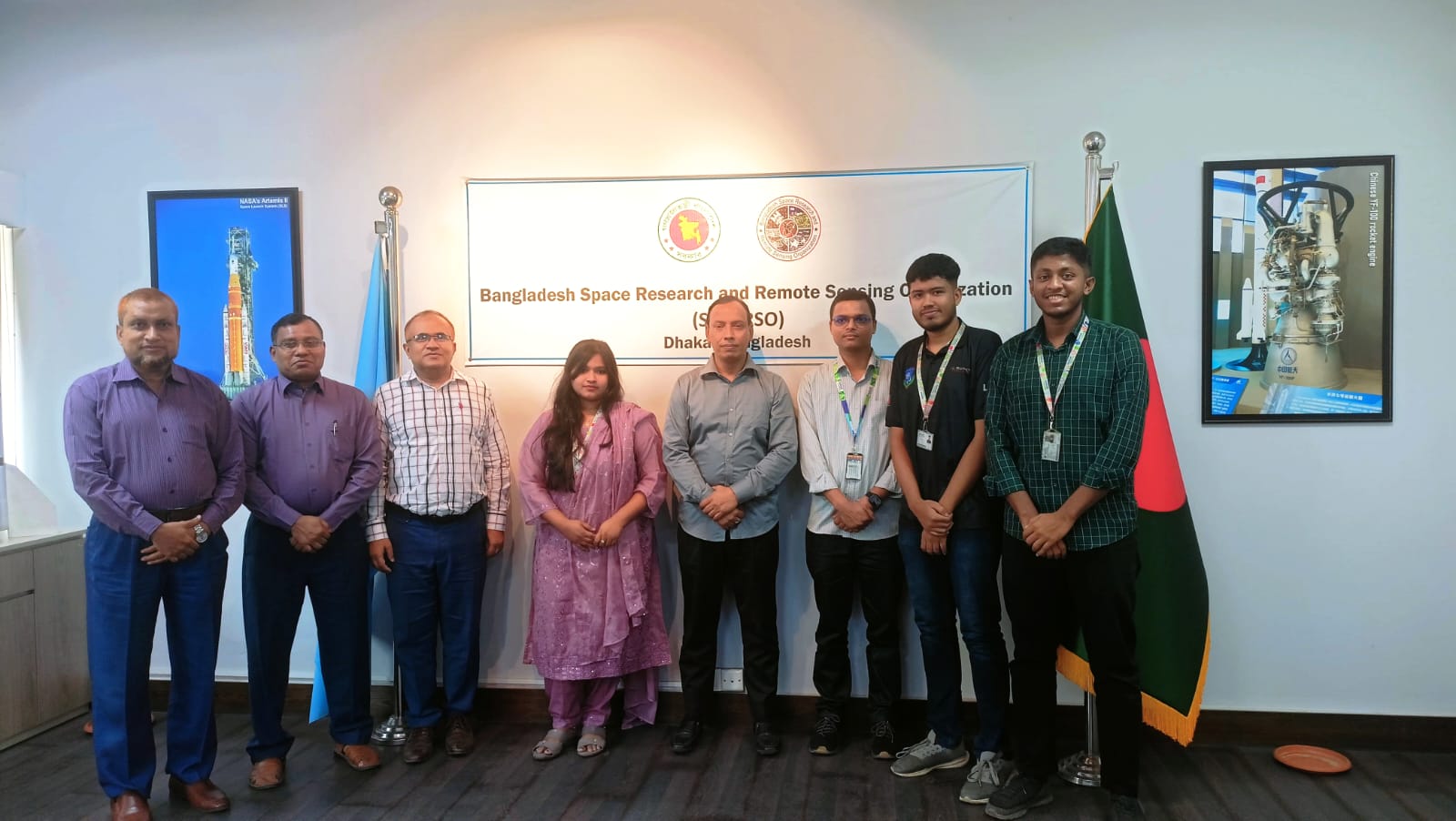
On 12 May 2026, the DIU Skyward team visited the Bangladesh Space Research and Remote Sensing Organization (SPARRSO) to discuss the INQUILAB‑2 sounding rocket project and explore future collaboration opportunities.
The meeting focused on DIU Skyward’s vision, technical setup, and long‑term goals, while SPARRSO scientists and officials engaged in discussions on aerospace research, safety standards, and student‑led innovation. Both sides emphasized the importance of academic–institutional partnerships in shaping Bangladesh’s future aerospace ecosystem.
This dialogue marks a step toward building a sustainable, student‑driven aerospace research culture in Bangladesh through innovation, collaboration, and responsible engineering practices.
On 12 May 2026, DIU Skyward team visited Bangladesh Space Research and Remote Sensing Organization (SPARRSO) for discussion on INQUILAB-2 sounding rocket research project and future collaboration opportunities.
We had a formal board meeting when we were there. Our team shared vision of the INQUILAB 2.0 project, research goals, technical setup and long-term goals. We had fruitful discussions with several eminent scientists, researchers and officials of SPARRSO on topics of aerospace research, safety standards, technical feasibility and the prospect for student-led space innovation in Bangladesh.
During the session, we were posed a number of important questions about the project. The discussion was primarily concerned with our seriousness and technical preparedness for this endeavor, the pragmatic feasibility of its successful completion and how this project would benefit Bangladesh in scientific research, engineering development and educational progress.
We tried to explain every part of the project in a responsible and transparent way. This meeting gave us the opportunity to express our long term vision of building a sustainable student led aerospace research culture in Bangladesh through research, innovation, collaboration and responsible engineering practices.
We are thankful to the officials and scientific community of SPARRSO for their valuable time, guidance and thoughtful discussion. We hope that this dialogue will pave the way for a fruitful collaboration on INQUILAB 2.0 project and future aerospace research projects in Bangladesh.
We think that the partnership between academic innovators and national scientific organizations can greatly shape the future aerospace and technological ecosystem of Bangladesh.